Pea gravel calculator for Maine
Plan patios, paths, fire pits, and play areas using tons of 3/8 inch rounded stone.
Enter your project dimensions
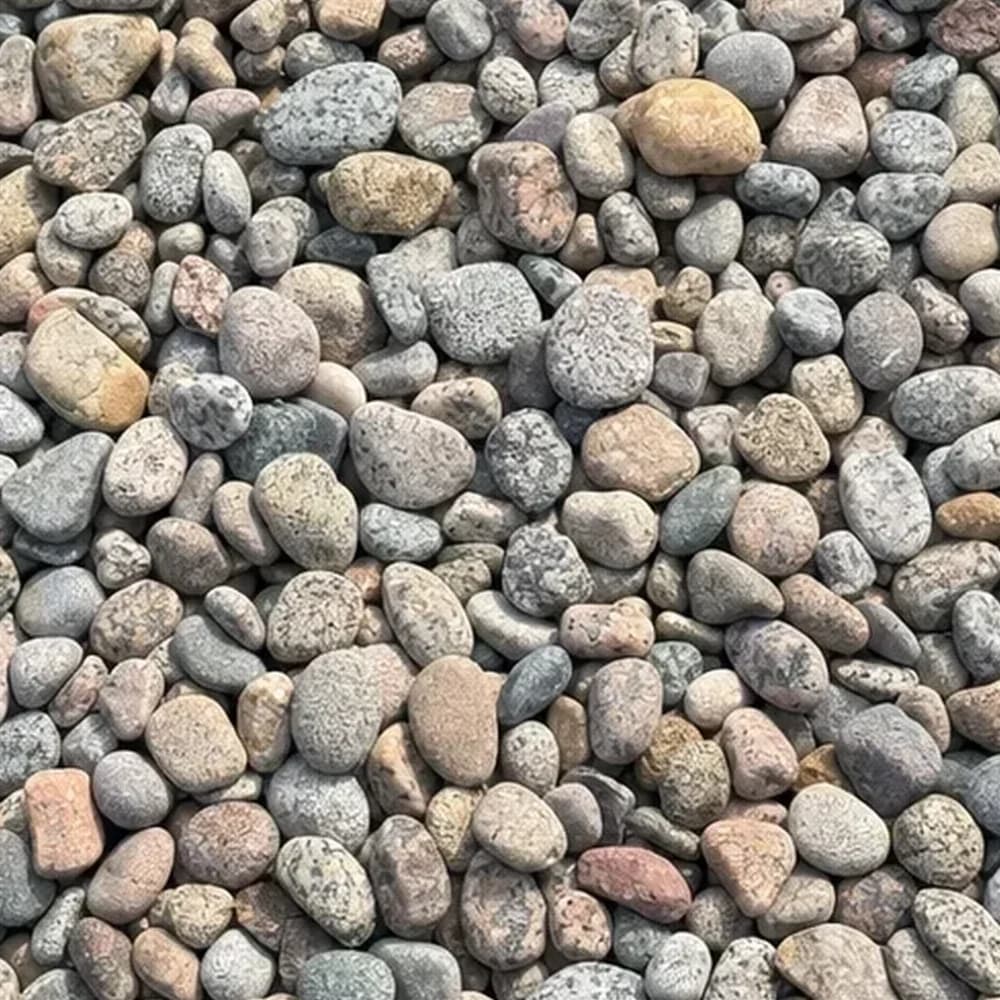
At 3/8 inch, pea gravel is rounded stone roughly matching the size suggested by its name. It weighs 2,800 lb per cubic yard, or 1.4 tons, the same as crushed gravel. Correct depth matters: below 2 inches, the ground can show through, while more than 3 inches can feel loose underfoot. Use this pea gravel calculator to convert measurements to tons, with set depths for the exception to the 2 to 3 inch guideline: play areas.
Turn measurements into tons
- Find the area by multiplying length and width; for a circular fire-pit surround, use its diameter.
- For walking areas, allow 2 to 3 inches. Maintain 9 to 12 inches in playground fall zones.
- Convert cubic feet to cubic yards by ÷ 27, then convert yards to tons with × 1.4.
Material coverage
| Depth | 1 cubic yard covers | 1 ton covers |
|---|---|---|
| 2 inches | 162 sq ft | ≈ 116 sq ft |
| 3 inches | 108 sq ft | ≈ 77 sq ft |
| 4 inches | 81 sq ft | ≈ 58 sq ft |
| 12 inches, play area | 27 sq ft | ≈ 19 sq ft |
| Project | Typical size | Depth | Volume | Weight |
|---|---|---|---|---|
| Patio / seating area | 12 x 12 ft | 3" | 1.3 yd³ | 1.9 tons |
| Garden walkway | 25 x 3 ft | 2.5" | 0.6 yd³ | 0.8 tons |
| Fire-pit surround | 12 ft round | 3" | 1 yd³ | 1.5 tons |
| Playground fall zone | 20 x 20 ft | 12" | 14.8 yd³ | 20.7 tons |
| Dog run | 15 x 8 ft | 3" | 1.1 yd³ | 1.6 tons |
A border keeps stone contained
Pea gravel shifts because its stones are round, so the edge needs to contain it. Keep steel, aluminum, timber or paver edging an inch above the surface; an edge set flush can allow stone to escape over time. At slopes over about 5%, runoff and foot traffic can carry gravel downhill even with edging. For sloped areas, place a honeycomb stabilizing grid below the gravel, or use angular crushed stone that interlocks.
Comparing pea gravel, crushed gravel and river rock
Pea gravel has smooth edges for bare feet and loose movement. Crushed walkway gravel grips together on slopes but feels sharper underfoot. River rock is larger and decorative, better suited to landscape beds than walking areas. Their prices generally rise in that sequence. A single property can use each material differently: crushed gravel on a sloping side path, pea gravel at a fire pit, and river rock beside a foundation. The calculators here let you compare tonnage for the same area in about a minute.
Practical project notes
- For patios, start with 2 inches of compacted screenings to keep chair legs from pressing in. Finish with 2 to 3 inches of pea gravel.
- Play areas require a maintained 9 to 12 inches for the standard fall-zone specification, so check the equipment manual. At 12 inches, a ton covers only about 19 square feet. Use the calculator instead of estimating by eye.
- For fire pits, use 3 inches. This non-flammable stone lets rain drain away from the seating area overnight.
- For dog runs, spread 2 to 3 inches. Rounded stone is gentle on paws and rinses clean.
- For walkways, level the surface with a rake twice yearly. Every couple of seasons, refresh the traffic line using a bucket or two kept aside.
Example calculation: a 12-foot fire-pit circle
A circle with a 12-foot diameter covers 113 square feet. At 3 inches: 113 x 0.25 = 28 cubic feet = 1.05 cubic yards, a little below 1.5 tons. Order 1.5, then save the small excess for the high-traffic side next spring.
Pea gravel measurements and weight
What quantity of pea gravel is needed?
What area will a ton of pea gravel cover?
What is the weight of a yard of pea gravel?
What is the cost of pea gravel?
What does pea gravel mean?
What depth is right for a pea gravel patio?
How much pea gravel should go below a swing set?
For a walkway, pea gravel or crushed gravel?
More calculators
Most patios require less than two tons.
3/8 inch natural pea gravel sold by the ton with free delivery.