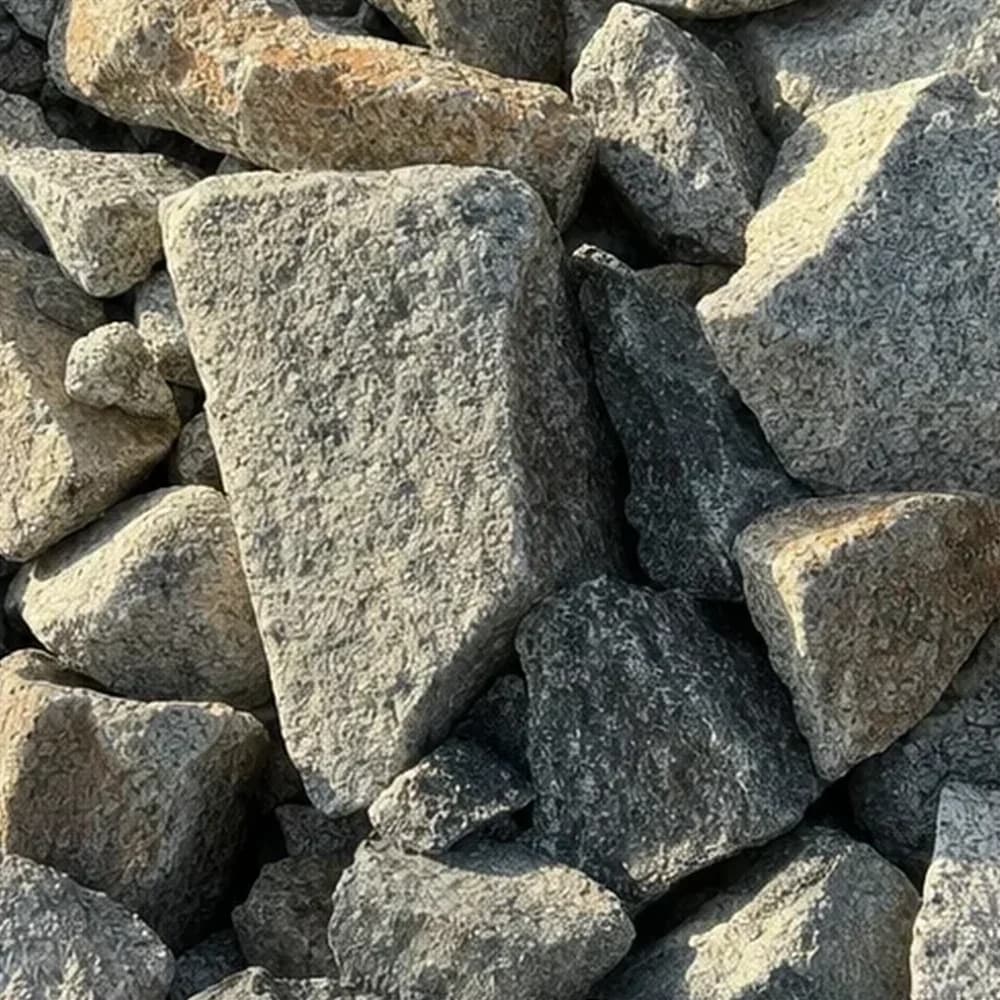
Rip rap calculator for Maine
Calculate shoreline and slope quantities by installed layer depth, since armor stone needs more depth than landscaping rock.
Enter your project dimensions
Expect one ton of riprap to cover around 17 square feet. Armor stone is placed in layers of 12 inches or more, so its coverage is far lower than landscape rock. This calculator uses layer depth and 3,100 lb per cubic yard for material commonly sized from 4 to 12 inches and larger.
How to measure an armored bank
- Measure along the sloped bank rather than across level ground, then multiply that distance by the shoreline or channel length.
- Use a layer measuring 1.5 to 2 times the largest stone, with 12 inches as the practical minimum for erosion control.
- Divide cubic feet by 27 for cubic yards, then multiply by 1.55 for tons.
Tons and coverage
| Layer thickness | 1 ton covers | Tons per 100 sq ft |
|---|---|---|
| 12 inches | ≈ 17 sq ft | 5.7 |
| 18 inches | ≈ 12 sq ft | 8.6 |
| 24 inches | ≈ 9 sq ft | 11.5 |
Installation details for effective stone armor
- Start with a base: install non-woven geotextile beneath the rock, or use 3-4 inches of #4 stone. Riprap laid directly on soil may look sound for a season, but can settle when water erodes the bank underneath.
- Bury the bottom course below the waterline or anticipated scour depth. The toe must be keyed in because failure often starts at the base.
- Before placing stone, shape the bank to 2:1 or flatter. A steeper slope calls for engineering rather than extra rock.
- Place the exposed upper course by hand or machine, fitting the stones together so they lock in place rather than sitting where they land.
- Carry the apron 4-6 pipe diameters beyond a culvert outlet. The downstream area is where scouring takes place.
Example: 50 feet of pond bank
A shoreline with a 6-foot slope face over 50 feet measures 300 square feet. For an 18-inch layer: 300 x 1.5 = 450 cubic feet = 16.7 cubic yards, or about 26 tons of riprap and 27 with the small allowance. Include a roll of geotextile, or choose about 4 tons of #4 stone for rock bedding. Check the delivery route before ordering, especially the final 20 feet to a pond edge, where a loaded truck can bog down and require the stone to be moved twice.
Following the first major storm
Set aside Ten minutes a couple of times each year to check a shorefront rock slope after the water has gone down. Start at the outlet and along the toe, watching for washed-out areas, bare ground in the stone, or filter fabric showing. Return loose rocks to their places and use saved material where the cover has thinned. Riprap needs little attention because the rock protects the bank without regular work.
Stone sizes at a glance
Choose stone for the water force involved. Four to eight inch riprap is suited to pond banks, downspout outlets and gentle streams. Eight to twelve works for shorelines with boat wake and swifter channels. Engineered projects such as highways and spillways have specified classes and depths, so follow the plan rather than this page. If you are between sizes, select the larger stone and increase layer thickness; more weight allows for more.
Riprap sizing, tonnage and placement
How can I estimate the rip rap required?
What coverage comes from 1 ton of riprap?
How large is a 1 ton pile of rip rap?
What is the cost for 1 ton of rip rap?
What layer depth does rip rap need?
Is hand placement possible for rip rap?
More calculators
Plan the bank protection.
Order RipRap by the ton with free delivery, along with #4 bedding stone for the layer beneath it.